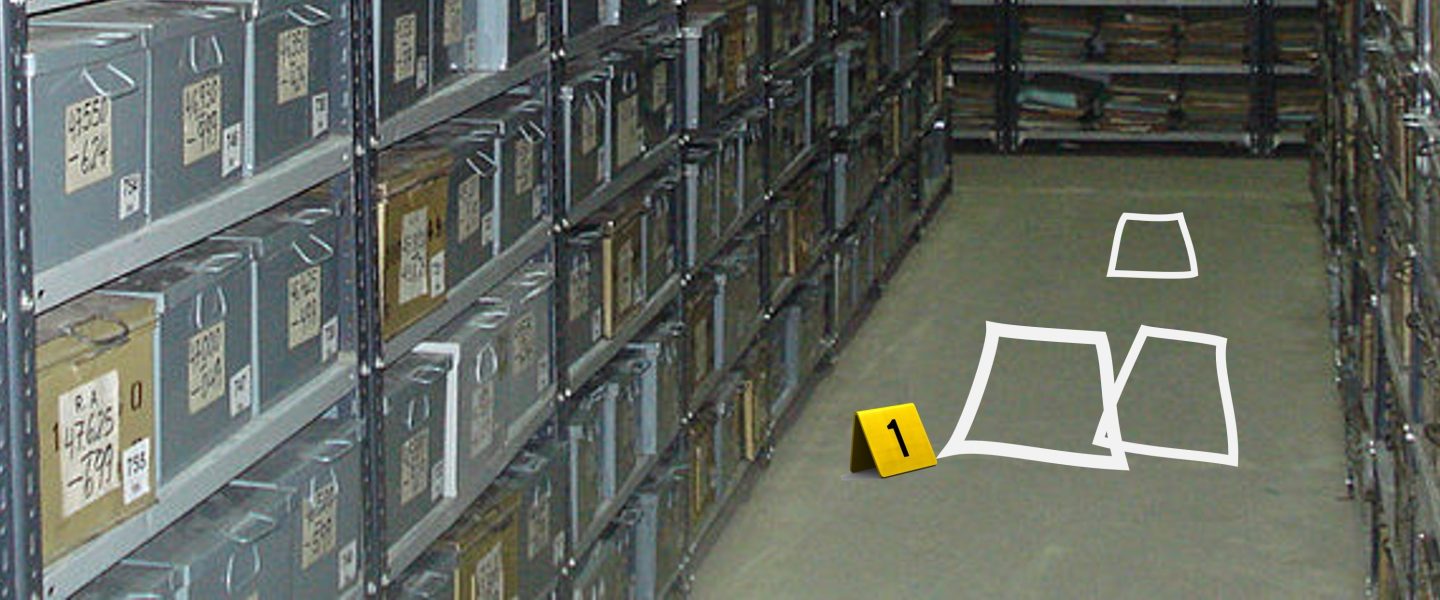
The Crime Museum Uncovered and the edges of dark tourism

Screenshot from: https://theconversation.com/acid-bath-murderers-and-poison-why-dark-tourism-is-important-49338

Above is a screenshot of my post at The Conversation. Below is a fuller and earlier version:

A few weeks ago I made a long-anticipated pilgrimage to The Museum of London to visit The Crime Museum Uncovered; anticipated because, for the last 11 years I have curated another police museum, and the dilemmas of keeping and displaying contentious artefacts and documents interests me; in addition I am a PhD student at the Open University examining the material culture of police archives. 

Tourism gone dark

Tourism is defined as dark when it involves visiting sites associated with death, disaster and tragedy “for remembrance, education or entertainment” (Lennon and Foley, 2000).  It isn’t hard to find examples of independent museums who make no bones about exploiting their darker sides. Just think of The Clink or The London Dungeon.  But the outrage over the recently opened Jack the Ripper Museum in London (also see my earlier blog on the Jack the Ripper Museum) shows how controversial dark tourism can be and how easy it is to get wrong. This museum clearly intended to target particular visitors, and ignored the fact that the subject is much more complex, including a number of important concerns around womens’ rights, poverty and crime. As a small, ill-informed enterprise they crossed ethical boundaries.

These grey boundaries mean that the brand of dark tourism is something that the partners of this latest exhibition (The Museum of London, The Metropolitan Police Service and The Mayor’s Office for Policing and Crime) have tried to distance themselves from. It’s obvious that they are anxious to avoid allowing visitors to unashamedly gawp at cabinets of curiosities and to ensure minds are correctly channelled.  They do so by safely anchoring the exhibition around academic themes such as museology and historiography, and by linking each of the 24 cases featured to developments in crime detection or law. They are also keen to emphasise the need for discretion and respect for the victims: they exhibit no individual cases post 1975 and, as part of the ethical process of selection and in compliance with the Human Tissues Act 2004, they display no human remains.  The police’s messages and outcomes are not as transparent. Undoubtedly it has been a huge public relations opportunity to celebrate their role in keeping the streets of London safe. In addition, however, remembrance is important and the display of a burnt riot shield from the Broadwater Farm riots of 1985 not only provides a far too small platform for contested histories, but also an opportunity for the police to remember and to remind the public of their fallen colleague, PC Keith Blakelock. 

Spotting dark tourists

downloaded image from: http://www.creativedrinks.com.au/brisbane-ekka-cakes/
Judging cakes: image from: http://www.creativedrinks.com.au/brisbane-ekka-cakes/

So, I asked myself as I sat in front of the panel about the Kray twins: what does a dark tourist look like? I considered the party of white-haired ladies who gathered in hushed discussion and who could, for all intents and purposes, have been Womens’ Institute members tutting over a disastrous sponge cake. The Kray twins were strange celebrity/gangster hybrids whose glamorous nightclubs served as portals through which the rich and famous were able to briefly pass, tasting a parallel world on the “other side of the law”. A form of reality dark tourism, perhaps?

The original Crime Museum did something similar. Based in New Scotland Yard’s notorious Room 101, it indeed housed some truly horrific items and, because it was never intended to be a “museum”, but rather a training resource, it had no boundaries around ethics. The small space created a melting pot where men in shiny, squeaky shoes and creased trousers rubbed shoulders with celebrities, politicians, historians and potential criminals (in the visitors’ book for 1905 is the signature of Frederick Seddon, who later murdered Eliza Barrow).

In the past, dark tourism was everywhere. Now it’s tainted, something that major museums are keen to distance themselves from: modernity has separated us from the daily immediacy of death. Yet we still have a basic human desire to understand the incomprehensible and to push at our own ethical boundaries.  As such, all museums play an important role in education, remembrance and entertainment and most hold numerous artefacts relating to death in some way. How many millions of visitors have stared at the grotesquely distorted figure of Lindow Man in the British Museum? Or the human-shaped voids at Pompeii frozen forever in the act of dying? Do such displays fall into the dark tourism net?

Screenshot from: http://www.express.co.uk/news/uk/422852/Police-could-reap-rewards-of-crime-by-opening-grisly-museum

So the dilemmas, particularly for museums of crime, are around how to manage the boundaries between entertainment and the perception of profiting at the expense of others pain. Profit, though not touched upon in this exhibition or supporting material, can’t have been far from the Metropolitan Police’s mind: with the sale of New Scotland Yard and with massive cuts across all police forces this small museum is not a key aim or objective of the police and needs to earn its keep. In August 2013 the Express posited a similar thought: “If entrance was charged at £15, the exhibition could look to bring in up to £4.5m” (adult entrance is £12.50).

Despite this pecuniary background, correctly managed, dark tourism is actually quite light at the edges. When emphasis is placed on remembrance and education it is a healthy part of building on our life experiences and the term should not be shied away from. It’s important to engage with and talk about our fascination with death.

Some further reading:
Lennon, J. and Foley, M. (2000) Dark tourism: the attraction of death and disaster, London and New York: Continuum
Rogers, N. (2002) Halloween: from pagan ritual to party night, Oxford University Press
Walby, K. (2011) “The polysemy of punishment memorialisation: dark tourism and Ontario’s penal history museums”, Punishment and Society, vol. 13, No. 4, 451-475
Keily, J. and Hoffbrand, J. (2015) The Crime Museum uncovered: inside Scotland Yard’s Special Collection, I.B. Tauris

I enjoy writing these blogs – I hope you enjoy reading them; please do share or comment!

The Jack the Ripper Museum and thoughts around “Ripperology”

Souvenirs from the Jack the Ripper Museum; image taken from museum website at: http://www.jacktherippermuseum.com/

I have been following the debate around the opening of the new Jack the Ripper Museum at 12 Cable Street, London both on the Museum Association’s LinkedIn pages, and also via the press who have interviewed irate support groups and local communities.  Yet I can’t help reflecting that the man at the root of it all – Mark Palmer-Edgecumbe will be all too familiar with the fact that “bad publicity is good publicity”; his new venture has certainly hit the headlines in a way which would have otherwise cost a fortune to organise, and this morning the website viewing figures were at 17,973.  If he can weather this big storm (and I understand the opening of the museum has been delayed) he may well have a viable business to take forward.

Institute for Dark Tourism Research at UCLAN; clipping from: http://www.uclan.ac.uk/research/explore/groups/institute_for_dark_tourism_research.php

So I consider, as I sit at my desk on this rainy Tuesday morning, whether some of this public outcry is around the discomfort of admitting that “Ripperology” is big money – a fact which has surely not gone over Mr Palmer-Edgecumbe’s head.  Not far from the new museum Jack the Ripper Tours advertise their latest technology: “the gruesome tale of Jack the Ripper explodes for the first time into the 21st century … WITH RIPPER-VISION“.  12 Cable Street was marketed at £500,000 as an excellent development opportunity.  Even with a total boycott from the local community and world of museums, at £12.00 entry fee and the online Ripper shop they may achieve a healthy profit by targeting the niche dark tourism sites and the curious tourists who crave a London of pea soup fogs and Sherlock Holmes murders.  And who am I to point a finger here – all heritage attractions are now chained to “sustainability” and business planning.  In academia dark tourism and histories have been widely researched, but where academics may venture in, museums or heritage attractions need to tread a fine line between “good” and “bad” taste and address the hard to define issues of decency, respect and ethics.  Indeed, Paul Mullins comments in his post on Archaeology and Material Culture website that “the Jack the Ripper Museum is firmly situated in this ambiguous tension between measured museum scholarship and tourist trap sensationalism”.

City of London Police Museum; screen clipping from: http://www.cityoflondon.police.uk/about-us/history/museum/Pages/default.aspx

Having worked as a curator for a police museum for over 10 years, acted as Arts Council England mentor for another police museum, as well as currently sitting on the committee of the Crime and Punishment Collections Network and researching an AHRC-funded PhD examining police collections, I constantly skirt around the boundaries of dark tourism and contested histories.  I am used to the fact that murder creates huge interest, whether from the salacious, the writers and readers of true crime or the historians of criminology; and I am equally aware of the sensitivities and ethics of holding artefacts and files which record sudden deaths in violent and often unexplained circumstances, in respecting the voices of the dead and, for more recent murder cases, the wishes of the families.  Often police files, forensic evidence and morgue photographs are all that the victims’ families have left.  Murder wreaks havoc through families for generations and I have occasionally had to work with relatives or descendants trying to piece together the guilt, the sorrow and the silence. Police, Prison and Court Museums are dotted around the country displaying artefacts and historic archives for the organisations they represent.  Indeed 30 minutes walk away is the City of London Police Museum which holds its own collection relating to Jack the Ripper including photographs and information about the investigation and also – though much less publicised – the Houndsditch Murders of 1910 which led to the Siege of Sidney Street (there is a post about it on The History Student’s blog). You won’t find portrayals of the dripping blood of women at this modest museum because it’s all to do with professionalism and public money.

It seems that this year is the year of criminal heritage.  The fantastic Forensics exhibition at the Wellcome Collection was, I felt, a triumph in the public examination of the science of solving murders.  They certainly recognised and commemorated the lost lives with an important part of the exhibition devoted to artists’ interpretations of crime scenes as sites of memory.  It cannot have gone unnoticed that the Museum of London will also be venturing into the world of dark histories when they host the first public viewing of the “Black Museum” from New Scotland Yard – a collection I have been privileged to visit on a number of occasions.  And this will indeed be a huge challenge because its very inaccessibility and nickname of the “Black Museum”  (in that it was  never intended for public view but as a training resource for detectives and officers) has created an aura of notoriety – below are some excerpts from the exhibition website:

“Giving voice to the real people – victims, perpetrators and police officers – behind these objects we’ll explore the impact of crime, personalising what is so often depersonalised. Confronting how, as a society, we respond when normality is shattered and lives are torn apart, we’ll also be forced to question our enduring fascination with this hidden collection and its stories”

and

“The exhibition is designed for an adult audience. It includes: objects, films and photographs relating to real criminal cases. These  include cases of violence, murder and terrorism, as well as smaller exhibits on abortion, drugs (including drugs paraphernalia) and capital punishment. The objects are largely evidence from the cases and are directly linked to and were used in the crimes or their investigation. The films are mainly footage of press reporting of the cases. Examples of weapons, including firearms, knives and concealed and home-made weapons”

With first hand experience of interpreting police collections, I believe the Museum of London will pull this off.  They have access to the necessary expertise and resources, as well as a wealth of experience in displaying archaeological remains and burial sites. 

Google Maps - street view; the new museum under wraps earlier this year; screen clipping from: https://www.google.co.uk/maps/@51.51084,-0.0678111,3a,75y,229.93h,87.07t/data=!3m6!1e1!3m4!1sIjx59laXnnnSY5y4rGtR1Q!2e0!7i13312!8i6656!6m1!1e1
Google Maps – street view; the new museum under wraps earlier this year; screen clipping from: https://www.google.co.uk/maps/@51.51084,-0.0678111,3a,75y,229.93h,87.07t/data=!3m6!1e1!3m4!1sIjx59laXnnnSY5y4rGtR1Q!2e0!7i13312!8i6656!6m1!1e1

So how has someone with Mark Palmer-Edgecumbe’s pedigree apparently got it so wrong?  Especially as it seems (according to an article in The Londonist who interviewed him on 31st July 2015) he was a Governor at the Museum of London from 2005 to 2013, Chairman of the Museum of London Docklands from 2006 to 2009 and former Head of Diversity and Inclusion for Google in the UK, Middle East and Africa. In addition (again according to The Londonist) Dr Cathy Ross, author and honorary research fellow at The Museum of London, acted as curatorial consultant and wrote a guide book. There seems to be a chronic lack of transparency and like some dark magician Mr Palmer-Edgecumbe appears to have duped his entire audience into believing this was going to be a museum for women’s history and no-one was any the wiser until the scaffolding and hoardings were taken down to reveal all.  Building Design Online interviewed Andrew Waugh of Waugh Thistle Architects who were commissioned by Mr Palmer-Edgecumbe to undertake the complex task of turning the narrow and cramped town house at 12 Cable Street into a fully functioning museum.  Mr Waugh is another individual who feels duped over the project and that he wouldn’t have touched it with a barge pole had he known the eventual outcomes.  He described how he was persuaded that the project had no money: “this was a real heart-felt project. It is incredibly important to celebrate women in politics in the East End.  We really ran with it … we did it at a bargain-basement fee …. we submitted it for planning and never heard another thing … when we heard it was going to be turned into a Jack the Ripper Museum we contacted the owner but got nothing back, we heard nothing.”  And so the façade adorns Cable Street complete with dripping blood, skull-and-cross-bones and fake English Heritage blue plaques commemorating suspected culprit George Chapman and the fourth victim, Elizabeth Stride.  A rushed retrospective planning consent application (see the image at the bottom of this page) to make good and appease his critics now includes signage for “Jack the Ripper Museum and the History of Women in the East End” – how can the two even sit side by side?  And so Mr Palmer-Edgecumbe digs himself yet deeper into this tangled, duplicitous and contradictory venture

Jack the Ripper Tours; image of website from: http://www.thejacktherippertour.com/

He may well have been inspired by The Sherlock Holmes Museum in Baker Street; a strange phenomenon in that many visitors truly believe it is a real place – a 3-dimensional site where fantasy is acted out.  And this must also be a relevant and critical concern for any serious curator of The Jack the Ripper Museum.  As has been pointed out by so many, it isn’t a ripping murder mystery but a grim sequence of events relating to deaths, women’s rights, poverty, violence and urban decay which sliced through the community at the time and continues to slice through the contemporary, rapidly evolving communities who are keen to celebrate all aspects of their rich heritage and contested histories “beyond” Jack the Ripper.  It does seem, according to the media at least, that there is not just anger, but also a real tiredness around the relentless exploitation of this part of London; for example, The Guardian’s “How the Jack the Ripper industry distorts London’s East End” and the Independent’s “Are Jack the Ripper tours blighting London?“.  I suspect much of this has to do with the rapid gentrification of these areas and that Mr Palmer-Edgecumbe’s venture is simply the straw that broke the camel’s back.  As more savvy and settled middle-class communities move in and replace the traditionally transient populations there will be more and more raised voices about the environment in which they live.

My final thoughts before I close this post are – I just can’t help feeling, like any good trick, that there must have been more going on behind the scenes than certainly I am led to believe.  Surely any heritage project which involves a number of interested parties should be allowing access not only to the physical site but to the changing vision – because visions are amorphous by their nature.  And with this in mind, I would like to know whether the press, or anyone, has been given a private viewing of the completed interior so that we can all at least make an informed judgement about the “book” rather than just the “cover”.  It makes me wonder whether Dr Cathy Ross has made a valiant attempt to interpret a poisoned chalice of a project, and the disastrous facade was left to the whims of Mr Palmer-Edgecumbe.

Thank you for taking the time to read this post.  I enjoyed writing it – I hope you enjoyed reading it.  Please comment, share or like.

Some further reading and useful sites:
Foley, M. and Lennon, J. (2001) Dark Tourism, Cengage Learning,
Walkowitz, D. and Knauer, L.M. (eds.) (2009) Contested Histories in Public Space: Memory, Race, and Nation, Duke University Press

Williams, C. (ed.) (2004) Giving the Past a Future: Preserving the Heritage of the UK’s Criminal Justice System, Francis Boutle: London
Our Criminal Past at: http://www.leedsbeckett.ac.uk/ourcriminalpast/
The Crime and Punishment Collections Network (CaP) at: https://capcollections.wordpress.com/
Challenging History Network at: https://challenginghistorynetwork.wordpress.com/
SOLON at: http://www.pbs.plymouth.ac.uk/solon/
The Open University: History from Police Archives at: http://www.open.ac.uk/Arts/history-from-police-archives/welcome.html
The Police History Society at: http://www.policehistorysociety.co.uk/

Jack the Ripper Museum; revised drawing for resubmitted planning consent; from: http://planreg.towerhamlets.gov.uk/WAM/showCaseFile.do;jsessionid=F0537C65EBDDCB852984059203F7B948?action=show&appType=Planning&appNumber=PA/15/02127


The British Museum – ducking the questions?

Egyptian duck or ducking the Egyptian question? British Museum shop; photograph by Angela Sutton-Vane 2015

On Monday 13th July I attended a great workshop at the British Museum on Using Museum Archives (post to follow). It was an overcast, very humid day and I felt hot and flustered after my journey. The noise and heat in the central court was overwhelming so, with some time to spare, I tried to find a small oasis of calm. I wasn’t successful – and with 6.7 million visitors during 2013 it is hardly surprising that, for me, the British Museum has never been a space for quiet contemplation.

photograph of the central court at the British Museum
Central court at the British Museum; photograph by Angela Sutton-Vane 2015

The central court with its biosphere-like dome is, of course, spectacular and the museum is unrecognisable from my student days when I worked as a weekend gallery attendant in the Parthenon and Egyptian Galleries.   I spent many long, long Saturdays standing unseen in my uniform, buffeted into a hypnotic state by tides of crushing people, praying for the end of the day and the last visitor to leave. Only then, with the lights dimmed and the doors locked, could I stand totally alone for a few brief minutes, absorb the profound silence and feel truly overwhelmed in the presence of these mighty time travellers. Too soon the bell was rung indicating that I should join the queue of exhausted gallery attendants and, reminiscent of a scene from Fritz Lang’s Metropolis, trudge back through the dark museum to the locker rooms.


Photograph of The Enlightenment Gallery, The British Museum; photograph by Angela Sutton-Vane 2015
The Enlightenment Gallery, British Museum; photograph by Angela Sutton-Vane 2015
Photograph of The Enlightenment Gallery, The British Museum; photograph by Angela Sutton-Vane 2015
The Enlightenment Gallery, British Museum; photograph by Angela Sutton-Vane 2015

I worked at the British Museum just prior to the redevelopment, and areas of the museum such as the King’s Library were great dusty, unexplained and empty voids used as walk-throughs for streams of confused visitors who paused to photograph the empty bookcases. In an attempt to make use of a heavily listed space the library has since been transformed into The Enlightenment Gallery, and bookshelves have become floor to ceiling cabinets of curiosities. It is a space that I feel still creates confusion and, as with the National Trust (where many visitors to the houses are convinced they are walking into a faithfully preserved space where the family have literally just left things as they were) this is also a space not entirely transparent in its intentions. The intentions, I imagine, may have been pretty basic – how to make use of acres of shallow, floor to ceiling bookshelves. The end result, however, is something that looks to the visitor as if it has always been there – an untouched throwback to the 18th century.

And questions around intentions and labelling must be huge for the British Museum. After the workshop, I revisited my student haunts of the heaving galleries of Ancient Egypt, Greece and Rome. The sheer size, magnificence and quantity of exhibits still takes my breath away; but even more so, the sheer audacity that the educated upper classes were removing on an industrial scale entire structures such as the Nereid Monument (described as the largest and finest Lykian tomb from Xanthos in Turkey and dating from 390 to 380 AD); or part of the colossal statue of King Rameses II which had flanked the entrance to the king’s mortuary temple in Egyptian Western Thebes; or the monumental sculptures from the palace of Tiglath-Pileser III at Nimrud (near Mosul in Iraq).  As such, these spaces continue to fill me with a niggling discomfort and disquiet.

The Nereid Monument from Xanthos; The British Museum; photograph by Angela Sutton-Vane 2015
The Nereid Monument from Xanthos; British Museum; photograph by Angela Sutton-Vane 2015
Colossal statue of King Rameses II from Egyptian Western Thebes; British Museum; photograph by Angela Sutton-Vane 2015

Questions around the ethics of 18th and 19th century collecting of antiquities – and the very questionability of the worlds of antiquities and antiquarians – are not unique to the British Museum.  And, as with any controversy or unresolved dispute, there is no black or white. For every noble story of altruistic acts in saving these artefacts from undoubted destruction – stories necessary to justify their collection and purchase to the British Museum’s board of trustees – it’s possible to find other stories (often overlooked by the British Museum) of bullying, self-motivation, corruption, bribery and greed (after all we’re talking about the British Empire) and waters were further muddied by the fact that countries were often complicit in selling off their own antiquities to dealers and archaeologists. I imagine most would agree that these huge, temple-like Victorian museums were all about celebrating and cementing The Empire and establishing Britain at the centre of a web of culture and heritage, in the same way that the Great Exhibition of 1851 placed Britain at the centre of trade.   I also acknowledge there is some truth, however mealy-mouthed it sounds, that many of these antiquities would have been lost if they hadn’t been “saved by the British” and this is an argument now tragically validated with the release of ISIL’s video this April documenting the destruction of the ancient city of Nimrud – what the British Museum left behind.

Sculpture from the Palace of Tiglath-Pileser III at Nimrud; photograph by Angela Sutton-Vane 2015
Sculpture from the Palace of Tiglath-Pileser III at Nimrud; British Museum; photograph by Angela Sutton-Vane 2015


Still from ISIL video of destruction of Nimrud; Aljazeera; April 2015


The British Museum has a duty to protect cultural artefacts; Neil MacGregor; British Museum; screen clipping from BBC News website
“The British Museum has a duty to protect cultural artefacts”; Neil MacGregor; British Museum; screen clipping from BBC News website
Why are the Parthenon Sculptures always in the news? British Museum; photograph by Angela Sutton-Vane 2015

As with endangered species, maybe the British Museum could be viewed as a sort of cultural reserve – keeping artefacts safe from extinction.  The problem with this analogy is that the ultimate aim of most nature reserves is to return the animals to their natural habitats and more recently the museum is keen to show it is taking on this role.  On the BBC’s News website is an article beginning: “The British Museum is guarding a precious artefact that was looted from Syria, in the hope of returning it when the country is stable”.  It also seems to be taking steps to recognise the legacies of its past collecting. Since I stood in the Parthenon Gallery dreading questions from cynical Greek tourists, there is now a little stand: “Why are the Parthenon Sculptures always in the news? …. Take a leaflet to find out more” – except frustratingly there are no leaflets to take.  The museum now examines collecting and collectors in its new gallery: Collecting the World – a difficult subject in another difficult space next to the King’s Library and also lined with the same listed, floor to ceiling bookcases. Here I imagine one of their intentions is to soften a controversial subject by transforming collectors into people with names, faces and personalities. In the central at the axis of the gallery sits a huge, yellow Grayson Perry pot and, of course, a beloved Grayson Perry (almost a national treasure in his own right) will always make a bitter pill more palatable.  And why not – I love a Grayson Perry pot as well.  In terms of “collecting” the pot, I’m sure the acquisition process was most civilised and mutually beneficial.

Collecting the World Gallery; British Museum; photograph by Angela Sutton-Vane 2015

The British Museum literally has a monumental legacy to address and I wouldn’t, for all the tea in China, want to be the person at the helm. It makes me realise why I hold so much respect for small, local history museums which are rarely about aggressive collecting, but about passive acquisition through donations by local people. They are the essence of localism – the artefacts stay close to home preserving the social glue of the community.

Some further reading:
A history of the British Museum Collection
A Brief History of the Supreme Council of Antiquities (SCA): 1858 to present
Archaeology and the Ethics of collecting by A.F. Chase, D.Z. Chase and H.W. Topsey which is available at: http://www.caracol.org/

So – finally, below are my pick of pics from my brief visit – a poodle of a marble lion in the Nereid monument gallery (museum number: 1848,1020.140), and a scene from the Parthenon frieze depicting bulls being dragged to sacrifice. Although, for me, the British Museum is like trying to learn in the departure lounge of an international airport, these snaps illustrate that it is a fantastic spectacle.


Marble lion in the Nereid monument gallery (museum number: 1848,1020.140); British Museum; photograph by Angela Sutton-Vane 2015


A scene from the Parthenon frieze depicting distressed bulls being dragged to sacrifice; British Museum; photograph by Angela Sutton-Vane 2015


Egyptian duck or ducking the Egyptian question? British Museum shop; photograph by Angela Sutton-Vane 2015
Egyptian duck or ducking the question? British Museum shop; photograph by Angela Sutton-Vane 2015