The preservation of records and the writing of police histories

Featured

A number of histories of UK police forces begin right at the beginning of policing with rich information about parish constabularies, early reform and the establishment of the Metropolitan Police. For some, by the chronological ending of the book, information tends to get thinner or peter out. The reasons for this could be three-fold. First, that regional force histories were often written at the point of amalgamations instigated by either the 1964 Police Act or the 1972 Local Government Act, in order to preserve a perceived loss of history. Or they may have been written to mark other major landmark events such as force centenaries many of which occurred in the mid-20th century. Secondly, this, in turn, indirectly influenced the chronology of national histories – for example, T.A. Critchley acknowledges that he made use of ‘forty or so’ local police force histories.[1] The third reason feeds into a reliance on secondary material (published books) which may indicate a lack of primary material (original records). Again this is particularly pertinent for regional forces whose records have never been incorporated into the Public Records Act and consequently were less protected.

This, then, really forms the crux of my blog: whether writing about police history, history of crime, or wider criminal justice history, and whether under the umbrella of academia or personal research, it all relies on the ability to access primary material held in record offices or by police force museums. I’ve written about this now on a number of occasions, most notably in my PhD thesis, but I’ll continue to beat the drum because here in 2021 I feel there is an under-represented concern about the health of historical writing and the ability to be able to create a balanced, current and relevant history of policing in the UK.  This blog, then, will set out to explore these challenges.

Recognition by police forces that their records have research and historical value

The Amazon page for The English Police by Clive Emsley provides a clue to the first of these challenges in describing the book as: “A comprehensive history of policing from the eighteenth century onwards, which draws on largely unused police archives ….”[2] Professor Emsley, as the doyen of policing history, undoubtedly had the necessary contacts to access those largely unused police archives. He also had insider knowledge in that in 1989 he and Dr Ian Bridgeman published their comprehensive survey of archival material held by police forces in force museums, archives, cupboards, store rooms or in offices at headquarters.

One outcome of Bridgeman and Emsley’s survey was L.A. Waters’ Towards a records management policy for provincial forces in England and Wales which was published by the Police History Society in 1992 and circulated to all UK police forces.[3] It was hoped this would at least draw attention to the plight of many of the records identified by Bridgeman and Emsley and provide a simple guide to assist forces in recognising and archiving valuable historical material. In 2003, Emsley and Dr Chris Williams sent out a survey to UK police forces in order to ascertain whether the guide had improved the situation. The responses to this survey identified one key problem which remains relevant today: only ten per cent of responding forces appreciated what sort of material was of future historic value with many archiving ‘a narrowly defined and static group of “historical” records.’[4]

The flow of records from police forces into the public domain

To an extent, Bridgeman and Emsley’s 1989 survey only told half the story because it didn’t touch on what police records were already sitting in the public domain in record offices. With finite funding and time and limited to just six record offices, my PhD research at least offered a glimpse of this missing narrative. By conducting surveys of online catalogues, corroborated with more direct contact with archivists, it showed that all six archives received large collections of policing records between the 1940s to 1980s. However, post 1980s there was a drop in all cases to near zero deposits being made by those same forces today. The surveys also revealed some important pointers around why police force records were entering the public domain:

  • Just over fifty per cent of the records currently held by archives could be described as ‘informal deposits’ in that they were presented to the record office by retired police officers, families of police officers, individual officers acting on their own initiative rather than any force agreed deposit.
  • Included in this were significant quantities from closing force museums;
  • Large quantities of records were deposited with record offices during periods of amalgamation as a result of closing station and department clear-outs, but also perhaps triggered by more emotional responses of removing material from the perceived subsuming force.
  • Much of the later material –  post 1980 – tends to be of a more curated nature: annual reports, newsletters, photographs, histories of the force; this again reflects not only a lack of understanding around what is important to preserve, but insecurity around what can safely be preserved.
  • More recently some police forces have removed collections from their local record office – notably Cumbria and Surrey police forces.

The reasons for the demise of historical police records entering the public domain is complex: of course computerisation and a reduction in paperwork needs to be viewed as a major contributor. But legislation such as Freedom of Information and Data Protection (GDPR) and PACE have all led forces to apply additional layers of control over their records and to view them as ‘high risk.’

One clear contributor has been the Management of Police Information (MoPI) which by narrowly defining and closely adhering to the DPA, FOIA and other legislation and policing protocols, has overshadowed and neglected the historical importance of the UK police.

The future of policing histories

Writing history is a complex balance of processes which involves access to a good range of primary material and the ability to interpret the material that is presented: who selected it; why is it there; what are the voices that are not represented? The section above clearly illustrates that what is selected is often tempered by emotional responses or control. The intellectual landscape of deposits is changing: layers of acts and policies not only started to plug the leaking fifty per cent of records flowing unofficially out of police forces and into the public domain, but reassessed the remaining fifty per cent.

As a good news story to end on: with work from the Home Office, the College of Policing and a number of key advisors, MoPI is being redrafted as a new Code. Perhaps the long beating of the drum has finally been heard because it will now have a greater emphasis around archiving records which is hugely welcomed. However, there are two critical points to monitor: first will this create greater access to records for researchers – and without access there is no history? Second, if it does encourage forces to archive more material, what sort of material will be preserved? It takes skill and courage to select representational cross sections which tell the entire story and whether forces have the expertise or resources to do this only time will tell.


Notes and further reading:

There are some recent and great success stories of important policing collections being deposited with local record offices, for example, Northamptonshire and Devon & Cornwall and it is hoped this trend will continue in the light of the new code. I would also like to recognise all those force museums who often work in difficult circumstances and yet provide excellent research facilities.

The National Police Chiefs’ Council have recently launched a Heritage Portfolio with the aim of supporting and protecting policing heritage

Bridgeman, Ian and Clive Emsley, A guide to the archives of the police forces of England and Wales (The Police History Society, 1989) (available here)

Sutton-Vane, Angela (2021) Investigating the murder file: A biographical analysis of creation, survival and impact (PhD thesis: The Open University) (available here)

Willlams, C.A. (ed) Giving the past a future: Preserving the heritage of the UK’s criminal justice system (London: Francis Boutle Publishers, 2004)

[1] For example Critchley cites histories of Swansea, Anglesey, Kent, Leeds and Cheshire Constabularies. T.A. Critchley, A history of police in England and Wales: 900-1966 (London: Constable & Co. Ltd, 1967), pp.xviii-xix

[2] Emsley, Clive, The English police: A political and social history (Harlow: Addison Wesley Longman, 1996)

[3] Waters, L.A. Towards a records management policy for provincial forces in England and Wales (Police History Society, 1992) (available from the Police History Society)

[4] Williams, Chris A. and Clive Emsley, Police records archiving policy in Great Britain: interim report, The International Centre for the History of Crime, Policing and Justice (Milton Keynes: The Open University, 2003)

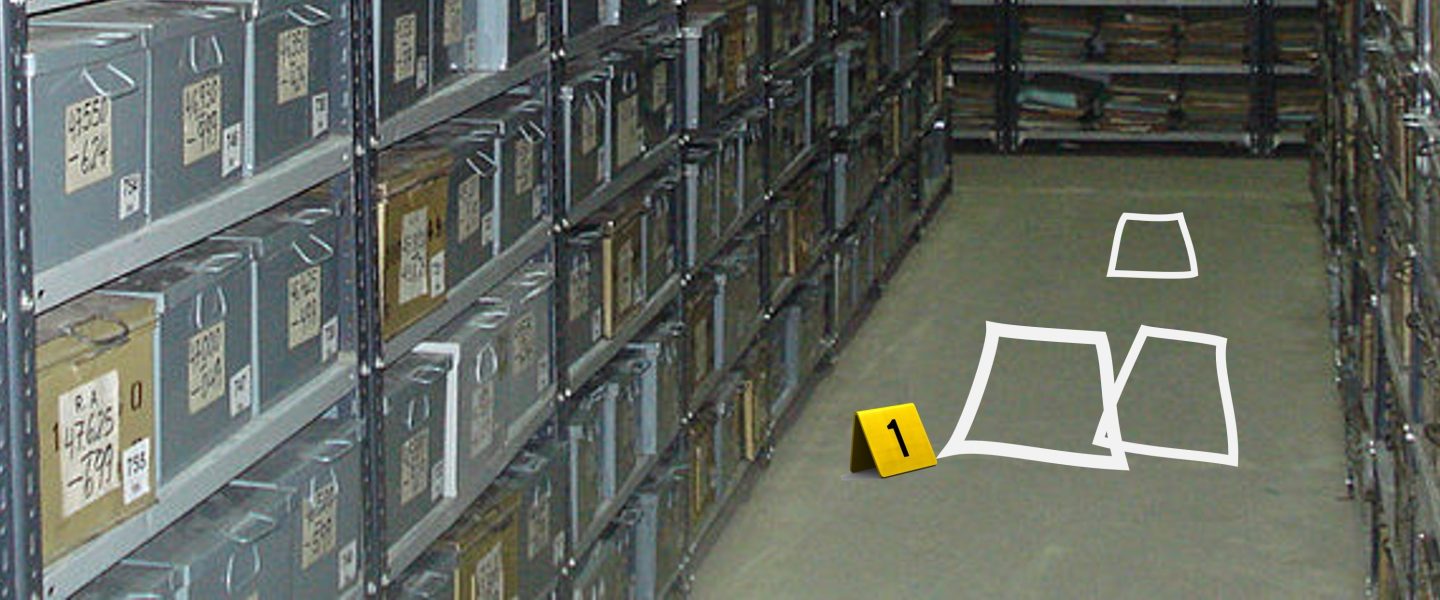
Images: Header image: Metal boxes on the shelves of the AySA archives (image in the public domain); File: East Sussex Record Office, R v Field and Gray, 1920, SPA 10/51/1; Graph: showing opening and closing dates of police records held at Cheshire Archives & Local Studies, created by Angie Sutton-Vane.

The Jack the Ripper Museum and thoughts around “Ripperology”

Souvenirs from the Jack the Ripper Museum; image taken from museum website at: http://www.jacktherippermuseum.com/

Souvenirs from the Jack the Ripper Museum; image taken from museum website at: http://www.jacktherippermuseum.com/

I have been following the debate around the opening of the new Jack the Ripper Museum at 12 Cable Street, London both on the Museum Association’s LinkedIn pages, and also via the press who have interviewed irate support groups and local communities.  Yet I can’t help reflecting that the man at the root of it all – Mark Palmer-Edgecumbe will be all too familiar with the fact that “bad publicity is good publicity”; his new venture has certainly hit the headlines in a way which would have otherwise cost a fortune to organise, and this morning the website viewing figures were at 17,973.  If he can weather this big storm (and I understand the opening of the museum has been delayed) he may well have a viable business to take forward.

Institute for Dark Tourism Research at UCLAN; clipping from: http://www.uclan.ac.uk/research/explore/groups/institute_for_dark_tourism_research.php

So I consider, as I sit at my desk on this rainy Tuesday morning, whether some of this public outcry is around the discomfort of admitting that “Ripperology” is big money – a fact which has surely not gone over Mr Palmer-Edgecumbe’s head.  Not far from the new museum Jack the Ripper Tours advertise their latest technology: “the gruesome tale of Jack the Ripper explodes for the first time into the 21st century … WITH RIPPER-VISION“.  12 Cable Street was marketed at £500,000 as an excellent development opportunity.  Even with a total boycott from the local community and world of museums, at £12.00 entry fee and the online Ripper shop they may achieve a healthy profit by targeting the niche dark tourism sites and the curious tourists who crave a London of pea soup fogs and Sherlock Holmes murders.  And who am I to point a finger here – all heritage attractions are now chained to “sustainability” and business planning.  In academia dark tourism and histories have been widely researched, but where academics may venture in, museums or heritage attractions need to tread a fine line between “good” and “bad” taste and address the hard to define issues of decency, respect and ethics.  Indeed, Paul Mullins comments in his post on Archaeology and Material Culture website that “the Jack the Ripper Museum is firmly situated in this ambiguous tension between measured museum scholarship and tourist trap sensationalism”.

City of London Police Museum; screen clipping from: http://www.cityoflondon.police.uk/about-us/history/museum/Pages/default.aspx

Having worked as a curator for a police museum for over 10 years, acted as Arts Council England mentor for another police museum, as well as currently sitting on the committee of the Crime and Punishment Collections Network and researching an AHRC-funded PhD examining police collections, I constantly skirt around the boundaries of dark tourism and contested histories.  I am used to the fact that murder creates huge interest, whether from the salacious, the writers and readers of true crime or the historians of criminology; and I am equally aware of the sensitivities and ethics of holding artefacts and files which record sudden deaths in violent and often unexplained circumstances, in respecting the voices of the dead and, for more recent murder cases, the wishes of the families.  Often police files, forensic evidence and morgue photographs are all that the victims’ families have left.  Murder wreaks havoc through families for generations and I have occasionally had to work with relatives or descendants trying to piece together the guilt, the sorrow and the silence. Police, Prison and Court Museums are dotted around the country displaying artefacts and historic archives for the organisations they represent.  Indeed 30 minutes walk away is the City of London Police Museum which holds its own collection relating to Jack the Ripper including photographs and information about the investigation and also – though much less publicised – the Houndsditch Murders of 1910 which led to the Siege of Sidney Street (there is a post about it on The History Student’s blog). You won’t find portrayals of the dripping blood of women at this modest museum because it’s all to do with professionalism and public money.

It seems that this year is the year of criminal heritage.  The fantastic Forensics exhibition at the Wellcome Collection was, I felt, a triumph in the public examination of the science of solving murders.  They certainly recognised and commemorated the lost lives with an important part of the exhibition devoted to artists’ interpretations of crime scenes as sites of memory.  It cannot have gone unnoticed that the Museum of London will also be venturing into the world of dark histories when they host the first public viewing of the “Black Museum” from New Scotland Yard – a collection I have been privileged to visit on a number of occasions.  And this will indeed be a huge challenge because its very inaccessibility and nickname of the “Black Museum”  (in that it was  never intended for public view but as a training resource for detectives and officers) has created an aura of notoriety – below are some excerpts from the exhibition website:

“Giving voice to the real people – victims, perpetrators and police officers – behind these objects we’ll explore the impact of crime, personalising what is so often depersonalised. Confronting how, as a society, we respond when normality is shattered and lives are torn apart, we’ll also be forced to question our enduring fascination with this hidden collection and its stories”

and

“The exhibition is designed for an adult audience. It includes: objects, films and photographs relating to real criminal cases. These  include cases of violence, murder and terrorism, as well as smaller exhibits on abortion, drugs (including drugs paraphernalia) and capital punishment. The objects are largely evidence from the cases and are directly linked to and were used in the crimes or their investigation. The films are mainly footage of press reporting of the cases. Examples of weapons, including firearms, knives and concealed and home-made weapons”

With first hand experience of interpreting police collections, I believe the Museum of London will pull this off.  They have access to the necessary expertise and resources, as well as a wealth of experience in displaying archaeological remains and burial sites. 

Google Maps - street view; the new museum under wraps earlier this year; screen clipping from: https://www.google.co.uk/maps/@51.51084,-0.0678111,3a,75y,229.93h,87.07t/data=!3m6!1e1!3m4!1sIjx59laXnnnSY5y4rGtR1Q!2e0!7i13312!8i6656!6m1!1e1
Google Maps – street view; the new museum under wraps earlier this year; screen clipping from: https://www.google.co.uk/maps/@51.51084,-0.0678111,3a,75y,229.93h,87.07t/data=!3m6!1e1!3m4!1sIjx59laXnnnSY5y4rGtR1Q!2e0!7i13312!8i6656!6m1!1e1

So how has someone with Mark Palmer-Edgecumbe’s pedigree apparently got it so wrong?  Especially as it seems (according to an article in The Londonist who interviewed him on 31st July 2015) he was a Governor at the Museum of London from 2005 to 2013, Chairman of the Museum of London Docklands from 2006 to 2009 and former Head of Diversity and Inclusion for Google in the UK, Middle East and Africa. In addition (again according to The Londonist) Dr Cathy Ross, author and honorary research fellow at The Museum of London, acted as curatorial consultant and wrote a guide book. There seems to be a chronic lack of transparency and like some dark magician Mr Palmer-Edgecumbe appears to have duped his entire audience into believing this was going to be a museum for women’s history and no-one was any the wiser until the scaffolding and hoardings were taken down to reveal all.  Building Design Online interviewed Andrew Waugh of Waugh Thistle Architects who were commissioned by Mr Palmer-Edgecumbe to undertake the complex task of turning the narrow and cramped town house at 12 Cable Street into a fully functioning museum.  Mr Waugh is another individual who feels duped over the project and that he wouldn’t have touched it with a barge pole had he known the eventual outcomes.  He described how he was persuaded that the project had no money: “this was a real heart-felt project. It is incredibly important to celebrate women in politics in the East End.  We really ran with it … we did it at a bargain-basement fee …. we submitted it for planning and never heard another thing … when we heard it was going to be turned into a Jack the Ripper Museum we contacted the owner but got nothing back, we heard nothing.”  And so the façade adorns Cable Street complete with dripping blood, skull-and-cross-bones and fake English Heritage blue plaques commemorating suspected culprit George Chapman and the fourth victim, Elizabeth Stride.  A rushed retrospective planning consent application (see the image at the bottom of this page) to make good and appease his critics now includes signage for “Jack the Ripper Museum and the History of Women in the East End” – how can the two even sit side by side?  And so Mr Palmer-Edgecumbe digs himself yet deeper into this tangled, duplicitous and contradictory venture

Jack the Ripper Tours; image of website from: http://www.thejacktherippertour.com/

He may well have been inspired by The Sherlock Holmes Museum in Baker Street; a strange phenomenon in that many visitors truly believe it is a real place – a 3-dimensional site where fantasy is acted out.  And this must also be a relevant and critical concern for any serious curator of The Jack the Ripper Museum.  As has been pointed out by so many, it isn’t a ripping murder mystery but a grim sequence of events relating to deaths, women’s rights, poverty, violence and urban decay which sliced through the community at the time and continues to slice through the contemporary, rapidly evolving communities who are keen to celebrate all aspects of their rich heritage and contested histories “beyond” Jack the Ripper.  It does seem, according to the media at least, that there is not just anger, but also a real tiredness around the relentless exploitation of this part of London; for example, The Guardian’s “How the Jack the Ripper industry distorts London’s East End” and the Independent’s “Are Jack the Ripper tours blighting London?“.  I suspect much of this has to do with the rapid gentrification of these areas and that Mr Palmer-Edgecumbe’s venture is simply the straw that broke the camel’s back.  As more savvy and settled middle-class communities move in and replace the traditionally transient populations there will be more and more raised voices about the environment in which they live.

My final thoughts before I close this post are – I just can’t help feeling, like any good trick, that there must have been more going on behind the scenes than certainly I am led to believe.  Surely any heritage project which involves a number of interested parties should be allowing access not only to the physical site but to the changing vision – because visions are amorphous by their nature.  And with this in mind, I would like to know whether the press, or anyone, has been given a private viewing of the completed interior so that we can all at least make an informed judgement about the “book” rather than just the “cover”.  It makes me wonder whether Dr Cathy Ross has made a valiant attempt to interpret a poisoned chalice of a project, and the disastrous facade was left to the whims of Mr Palmer-Edgecumbe.

Thank you for taking the time to read this post.  I enjoyed writing it – I hope you enjoyed reading it.  Please comment, share or like.

Some further reading and useful sites:
Foley, M. and Lennon, J. (2001) Dark Tourism, Cengage Learning,
Walkowitz, D. and Knauer, L.M. (eds.) (2009) Contested Histories in Public Space: Memory, Race, and Nation, Duke University Press

Williams, C. (ed.) (2004) Giving the Past a Future: Preserving the Heritage of the UK’s Criminal Justice System, Francis Boutle: London
Our Criminal Past at: http://www.leedsbeckett.ac.uk/ourcriminalpast/
The Crime and Punishment Collections Network (CaP) at: https://capcollections.wordpress.com/
Challenging History Network at: https://challenginghistorynetwork.wordpress.com/
SOLON at: http://www.pbs.plymouth.ac.uk/solon/
The Open University: History from Police Archives at: http://www.open.ac.uk/Arts/history-from-police-archives/welcome.html
The Police History Society at: http://www.policehistorysociety.co.uk/

Jack the Ripper Museum; revised drawing for resubmitted planning consent; from: http://planreg.towerhamlets.gov.uk/WAM/showCaseFile.do;jsessionid=F0537C65EBDDCB852984059203F7B948?action=show&appType=Planning&appNumber=PA/15/02127